


Sanwei:Your Professional Stud Bolt Manufacturer!
Hebei Sanwei Fasteners Co., Ltd. is a high-tech enterprise specializing in the research, development, production, and sale of fasteners, located in Hebei Province, China. Since its establishment,wei has been committed to providing customers with high-quality, high-performance fastener solutions, which are widely used in various fields such as construction, machinery manufacturing, automobile, and power communication.
-
![304 Stainless Steel Full Thread Stud Bolt M8-M20 Double End Stud Bolt]() 304 Stainless Steel Full Thread Stud Bolt M8-M20 Double End Stud BoltThese 304 stainless steel full thread studs range from M8 to M20. Made of high-quality 304 stainless steel, they feature excellent rust resistance, corrosion resistance and high toughness. Full
304 Stainless Steel Full Thread Stud Bolt M8-M20 Double End Stud BoltThese 304 stainless steel full thread studs range from M8 to M20. Made of high-quality 304 stainless steel, they feature excellent rust resistance, corrosion resistance and high toughness. Full -
![Double Ended Threaded Bolt DIN938 DIN939]() Double Ended Threaded Bolt DIN938 DIN939Standard: DIN938/939. Name: Double-ended threaded studs. Material: carbon steel,Stainless Steel and alloy steel,etc.. Grade: Grade 4.8, Grade 5.8, Grade 8.8,SS201,SS304,SS316
Double Ended Threaded Bolt DIN938 DIN939Standard: DIN938/939. Name: Double-ended threaded studs. Material: carbon steel,Stainless Steel and alloy steel,etc.. Grade: Grade 4.8, Grade 5.8, Grade 8.8,SS201,SS304,SS316 -
![Double Ended Bolt]() Double Ended BoltStandard: DIN938/939. Name: Double head bolts. Material: carbon steel, alloy steel. Grade: Grade 4.8, Grade 5.8, Grade 8.8, Grade 10.9, Grade 12.9
Double Ended BoltStandard: DIN938/939. Name: Double head bolts. Material: carbon steel, alloy steel. Grade: Grade 4.8, Grade 5.8, Grade 8.8, Grade 10.9, Grade 12.9 -
![M6 Double Ended Stud]() M6 Double Ended StudStandard: DIN938/939. Name: M6 double head studs. Material: carbon steel, alloy steel. Grade: Grade 4.8, Grade 5.8, Grade 8.8, Grade 10.9, Grade 12.9
M6 Double Ended StudStandard: DIN938/939. Name: M6 double head studs. Material: carbon steel, alloy steel. Grade: Grade 4.8, Grade 5.8, Grade 8.8, Grade 10.9, Grade 12.9 -
![Double Ended Threaded Bolt]() Double Ended Threaded BoltStandard: DIN938/939. Name: Double-ended threaded studs. Material: carbon steel, alloy steel. Grade: Grade 4.8, Grade 5.8, Grade 8.8, Grade 10.9, Grade 12.9
Double Ended Threaded BoltStandard: DIN938/939. Name: Double-ended threaded studs. Material: carbon steel, alloy steel. Grade: Grade 4.8, Grade 5.8, Grade 8.8, Grade 10.9, Grade 12.9 -
![Double Hex Stud]() Double Hex StudStandard: DIN938/939. Name: Double hexagonal studs. Material: carbon steel, alloy steel. Grade: Grade 4.8, Grade 5.8, Grade 8.8, Grade 10.9, Grade 12.9
Double Hex StudStandard: DIN938/939. Name: Double hexagonal studs. Material: carbon steel, alloy steel. Grade: Grade 4.8, Grade 5.8, Grade 8.8, Grade 10.9, Grade 12.9 -
![Stud Bolt For Wheel]() Stud Bolt For WheelStandard: DIN74361. Name: Stud Bolt For Wheel. Material: carbon steel, alloy steel. Grade: Grade 8.8, Grade 10.9, Grade 12.9
Stud Bolt For WheelStandard: DIN74361. Name: Stud Bolt For Wheel. Material: carbon steel, alloy steel. Grade: Grade 8.8, Grade 10.9, Grade 12.9 -
![Stud Bolt Types]() Stud Bolt TypesThe main types of studs are equal-length studs and unequal-length studs.. Equal length studs have the same length of threads at both ends, and this design makes it very convenient to connect two
Stud Bolt TypesThe main types of studs are equal-length studs and unequal-length studs.. Equal length studs have the same length of threads at both ends, and this design makes it very convenient to connect two


Why Choose Us
OEM/ODM Service
Our customised fasteners are made to your special requirements. It can be fully threaded or partially threaded, and the thread, driving method, material, length, head shape, plating and all these can be specially designed according to your needs.
Good CNC machining technology
From material selection to finished products, Handan Sanwei provides you with comprehensive solutions when it comes to customised fasteners. The fasteners we make are high precision and strong. No matter what kind of precision you need, we can meet it and guarantee your satisfaction.
Strong engineering design team
Our company has an excellent and professional engineering team, and a number of technicians are elites in the industry. The staff always strives to explore new methods and technologies. From the selection of metals and special alloy materials to the finished fasteners, we can solve all aspects of the whole project engineering.
Professional Testing Laboratory
Quality assurance and testing is an important part of producing fasteners. Handan Sanwei has a specialised quality testing laboratory with spectrometers, hardness testers, tensile testers, salt spray test chambers and other equipment, where raw materials and final products are strictly tested. In addition, the company also has experienced testing experts who use professional methods to comprehensively test the fasteners and finally give you a detailed test report.
Digital Quality Control System
We rely on our self-developed full-process digital quality inspection system to strictly control every step from raw materials entering the factory to finished products being shipped. This system will always monitor the quality of the products to ensure that each batch of products meets the industry standards and complies with customer requirements. In addition, it collects and feeds back data in real time, giving you a clear understanding of product quality.
High strength and stability
Stud bolts are usually made of high-strength materials, such as high-strength steel, stainless steel, etc., with high load-bearing capacity and tensile strength. This enables it to provide a stable and reliable connection when connecting large devices or structures, and is not easy to break or fail.Its special thread flip design gives it better shockproof performance and maintains the stability of the connection even under severe vibration.
Easy to install and remove
The installation and removal of stud bolts are relatively simple, usually only basic tools such as wrenches are needed, without complex equipment or technology. This convenience makes it very efficient when maintaining and replacing connectors.The design of the stud bolt allows it to be tightened from both ends, which helps to operate in a small space and facilitates the adjustment of the tightness of the connection.
Wide applicability
Stud bolts are widely used, not only for connecting large devices such as steel structures, bridges, machinery and equipment, but also for large equipment that needs to install accessories, such as sight glasses, mechanical seal seats, speed reducers, etc. Its long bolt length allows it to connect thicker engineering structures, such as concrete roof trusses and monorail beam suspensions.Its high precision and interchangeability also make it widely used in various industrial fields, such as railway transportation, aerospace, etc.
Durability
Stud bolts are specially treated and manufactured to have high corrosion resistance and wear resistance. As long as anti-corrosion treatment is carried out frequently, its service life can be greatly increased.
Enhanced safety
Stud bolts are very sturdy form which adds to the safety feature of a stud bolt, especially in industrial applications. Its high safety score allows them to be used under extreme conditions where there is a possibility of hazard due to bolt failure.
Specification
|
Name |
Stud Bolt |
|
Standard |
DIN938/939 |
|
Material |
Carbon steel, alloy steel |
|
Grade |
Grade 4.8, Grade 5.8, Grade 8.8, Grade 10.9, Grade 12.9 |
|
Nominal Diameter |
M2-M48 |
|
Pitch |
0.4-5 |
|
Surface treatment |
ZP,YZ,BLACK |
Applications of Stud Bolt

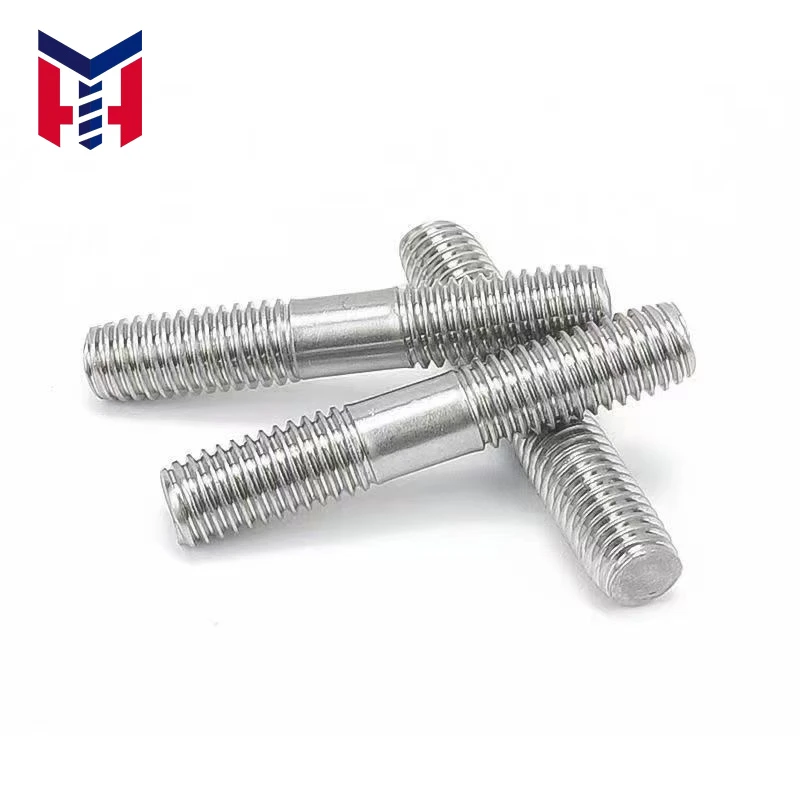
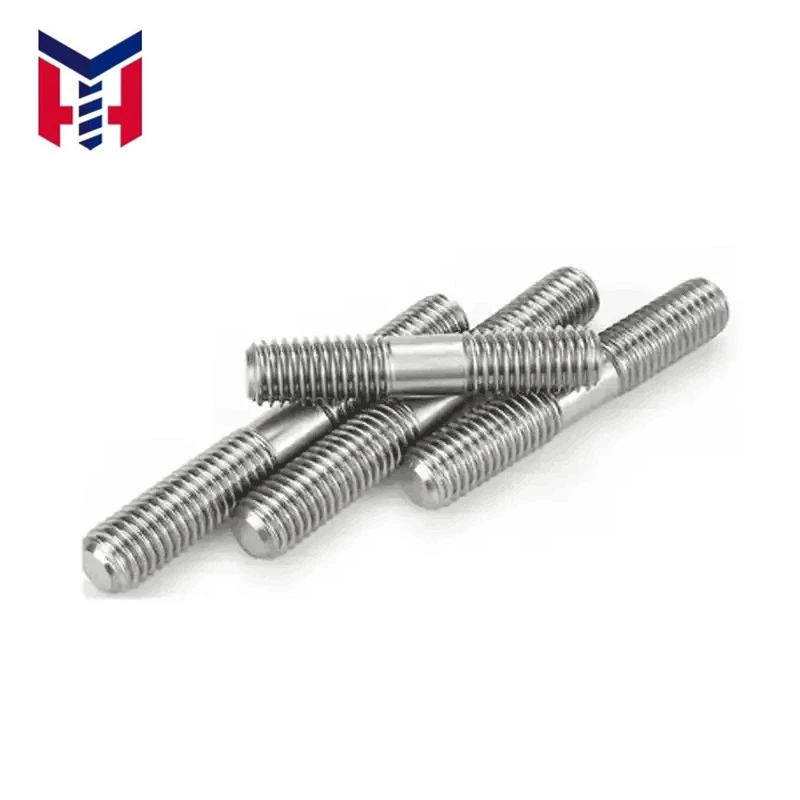

Oil and Gas Industry
In the oil and gas sector, stud bolts are essential for connecting various components such as pipelines, valves, and flanges. These components often face extreme conditions, such as high pressure and temperature. Stud bolts made from materials like super duplex steel are preferred for their excellent mechanical properties and resistance to corrosion, ensuring the reliability and safety of the system.
Chemical Processing
Chemical processing plants rely on stud bolts for securing equipment like heat exchangers, reactors, and pressure vessels. The aggressive chemical environments in these plants require corrosion-resistant materials such as Inconel and Hastelloy, ensuring durability and longevity.
Power Generation
Stud bolts play a crucial role in power generation facilities, where they are used to fasten boiler equipment, turbines, and steam lines. These applications require bolts that can endure high thermal and mechanical stresses. Stud bolts made from high-temperature-resistant materials like Inconel are ideal for these environments, as they maintain their strength and integrity under extreme conditions.
Petrochemical Plants
In petrochemical plants, stud bolts are used to assemble and maintain various processing units that handle volatile substances. The reliability of these connections is paramount to prevent leaks and ensure safe operation. Stud bolts made from specialty alloys provide the necessary strength and resistance to chemical corrosion, contributing to the overall safety and efficiency of the plant.
Construction and Infrastructure
In construction, stud bolts connect large structural components like beams and columns, ensuring the integrity of buildings, bridges, and other infrastructure. The high strength and durability of stud bolts make them suitable for these demanding applications.
Shipbuilding and Marine Applications
The shipbuilding industry utilizes stud bolts for assembling ship engines, deck machinery, and underwater piping systems. The harsh marine environment requires fasteners that are highly resistant to corrosion. Stud bolts made from materials like stainless steel and super duplex steel are preferred for their excellent corrosion resistance and mechanical properties.
Machinery Manufacturing
In the manufacturing of machinery, stud bolts are used to connect various mechanical parts. These connections need to be stable and reliable to ensure the proper functioning of the machinery. The precision engineering of stud bolts allows for accurate torque application, making them ideal for these applications.
Automobile Manufacturing
Stud bolts are used in the automobile industry to secure body parts such as engine hoods and doors. These applications require fasteners that provide high connection stability and reliability. Stud bolts meet these requirements by offering strong and durable connections that can withstand the dynamic conditions of vehicle operation.
Furniture Manufacturing
In the furniture industry, stud bolts are employed to assemble various components, ensuring structural stability and safe use. The versatility of stud bolts allows them to be used in a wide range of furniture designs, providing reliable connections that enhance the durability of the final product.
Electronic Equipment
Stud bolts are used in the assembly of electronic equipment, such as securing computer motherboards. These applications require fasteners that provide stable and reliable connections to ensure the proper operation of the electronic components.
Other Fields
Stud bolts are also utilized in various other fields, including mining machinery, boiler steel structures, and crane towers. Their high strength and stability make them suitable for applications where strong and secure connections are necessary. Additionally, stud bolts are used in anti-loosening applications to prevent connections from becoming loose due to vibration.
Materials Used for Stud Bolts
Carbon Steel
Stud bolts are usually manufactured by carbon steel which is the most common material regarding high strength as well as cost-effectiveness. It is usually utilized in the regular tasks where no corrosion elements or to very high temperatures. This kind of grade is used in industrial and moderate condition because of its strength at moderate temperatures giving approximately 125,000 PSI tensile and commonly known as ASTM A193 Grade B7.
01
Stainless Steel
In the case of corrosive environments, stainless is by far the most obvious choice due to its natural corrosion resistance properties. Common grades include 304 and 316 stainless steel, with the latter more desirable in very corrosive marine or chemical environments due to increased corrosion protection provided by its higher molybdenum content.
02
Alloy Steel
Where greater high-temperature needs exist such as for alloy stud bolts. Grades of ASTM A193 Grade B16 are used for high temperature or high pressure applications like boiler and pressure vessels. Depending on the grade and heat treatment, bolts can have tensile strengths that exceed 125,000 PSI and are capable of withstanding temperatures up to 450°C.
03
Exotic Alloys
In extreme conditions, such as corrosive saltwater environments or highly acidic and alkaline exposure, we use exotic alloys like Hastelloy, Inconel, Monel and Titanium. These offer incredible power and resistance to corrosion and heat bye extension.
04
Coatings and Platings
Aside from the foundation materials, stud bolts are frequently provided with surface treatment that permit them higher corrosion resistance or lower friction. Carbon steel bolts are typically zinc plated to prevent them from rusting, and in the case of bolts used in marine applications they would have excellent corrosion resistance properties by being cadmium plated. In the case of applications needing non-stick properties or lower friction, PTFE (Teflon) coating is applied that will also bring a layer of corrosion resistance.
05
Installation of Stud Bolts: Pre-Installation Considerations, Step-by-Step Installation Process, Torque vs. Tension
Before installing stud bolts, several factors need to be considered:
Load Requirements: Determine the expected loads, forces, and stresses that the stud bolts will experience during operation. This helps in selecting the appropriate stud bolt material, diameter, and thread pitch.
Environmental Conditions: Consider the environment in which the stud bolts will operate. Factors such as temperature, humidity, chemicals, and corrosive substances can impact the choice of material and the need for additional coatings.
Assembly Sequence: Plan the order of component assembly to ensure that stud bolts can be threaded into position without obstructions. This is particularly important when using continuous thread or double-end stud bolts.
Thread Lubrication: Applying an appropriate thread lubricant can reduce friction during tightening and improve the accuracy of torque or tension application.
Here is a general step-by-step guide for installing stud bolts:
Prepare Components: Ensure that the components to be joined are clean, properly aligned, and free from debris or contaminants.
Thread Stud Bolts: Thread the stud bolts into the designated holes or openings on the first component. For double-end stud bolts, thread the appropriate length on each end.
Insert Nuts: Place nuts onto the threaded ends of the stud bolts. If using continuous thread or double-end stud bolts, make sure there is enough clearance for the nuts to be threaded without obstruction.
Tighten Nuts: Begin tightening the nuts alternately and gradually on each end. Use a wrench or torque tool to achieve the desired level of tightness.
There are two primary methods for tightening stud bolts: torque tightening and tension tightening.
Torque Tightening: This method involves applying a specific amount of torque (rotational force) to the nut, which creates tension in the stud bolt. Torque wrenches are commonly used to achieve the specified torque.
Considerations:
Friction between threads and components can affect torque accuracy.
Torque specifications might not account for variations in friction.
Tension Tightening: Tension tightening involves applying a specific level of tension directly to the stud bolt. This technique directly controls the tension in the bolt rather than relying on the torque required to achieve it.
Considerations:
Requires specialized tensioning equipment.
Load distribution across multiple bolts might vary.
Packaging and Shipping

FAQ
We're professional stud bolt manufacturers and suppliers in China, specialized in providing high quality products and service. We warmly welcome you to wholesale customized stud bolt made in China here from our factory. Contact us for quotation.
M6 Double Ended Stud, Double Ended Threaded Bolt DIN938 DIN939, Double Ended BoltPopular Products


