


Sanwei – Your Professional Bolt Manufacturer
Hebei Sanwei Fasteners Co., Ltd. is a high-tech company specialized in the research, development, production, and sale of fasteners in Hebei Province, China. Since our establishment, we have been dedicated to providing customers with high-quality, high-performance fastener solutions for various industries.
OEM/ODM Service
Our customised fasteners are made to your special requirements. It can be fully threaded or partially threaded, and the thread, driving method, material, length, head shape, plating and all these can be specially designed according to your needs.

Advanced CNC Machining Technology
From material selection to finished products, Handan Sanwei provides comprehensive customized solutions. With precise CNC machining capabilities, we can meet diverse precision requirements and deliver consistent quality you can trust.

Strong engineering design team
Our company has an excellent and professional engineering team, and a number of technicians are elites in the industry. The staff always strives to explore new methods and technologies. From the selection of metals and special alloy materials to the finished fasteners, we can solve all aspects of the whole project engineering.
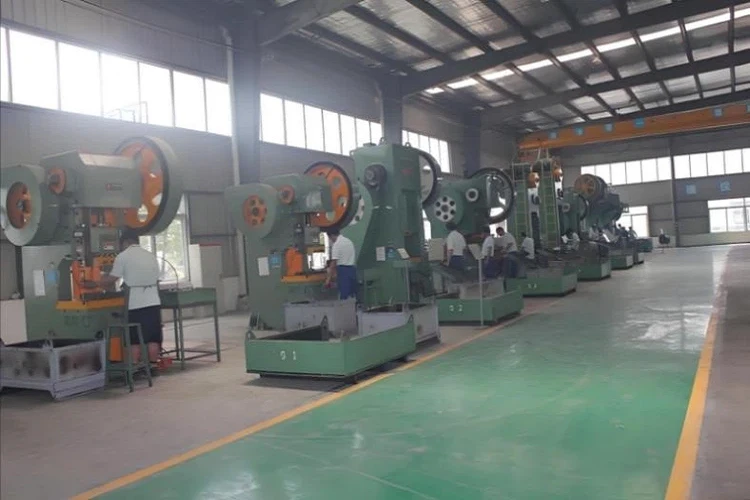
Digital Quality Control System
We rely on our self-developed full-process digital quality inspection system to strictly control every step from raw materials entering the factory to finished products being shipped. This system will always monitor the quality of the products to ensure that each batch of products meets the industry standards and complies with customer requirements.
-
![Stainless Steel Spring Washer M2-M36 Custom Carbon Steel Zinc Plated]() Stainless Steel Spring Washer M2-M36 Custom Carbon Steel Zinc PlatedDetails:Common Materials304 Stainless Steel, 316 Stainless SteelSize Range:Inner Diameter: M2 – M36 (customizable)Surface Finish:Natural (Stainless Steel Finish); special treatments available upon
Stainless Steel Spring Washer M2-M36 Custom Carbon Steel Zinc PlatedDetails:Common Materials304 Stainless Steel, 316 Stainless SteelSize Range:Inner Diameter: M2 – M36 (customizable)Surface Finish:Natural (Stainless Steel Finish); special treatments available upon -
![Stainless Steel Spring Washers]() Stainless Steel Spring WashersCommon Materials. 304 Stainless Steel, 316 Stainless Steel. Size Range: . Inner Diameter: M2 – M36 (customizable). Surface Finish: . Natural (Stainless Steel Finish); special treatments available
Stainless Steel Spring WashersCommon Materials. 304 Stainless Steel, 316 Stainless Steel. Size Range: . Inner Diameter: M2 – M36 (customizable). Surface Finish: . Natural (Stainless Steel Finish); special treatments available -
![Stainless Steel Flat Washers]() Stainless Steel Flat WashersName:flat washerMaterial:Stainless steel 304, stainless steel 316Packing:PE+Cardboard Box+Pallet
Stainless Steel Flat WashersName:flat washerMaterial:Stainless steel 304, stainless steel 316Packing:PE+Cardboard Box+Pallet -
![Stainless Steel Flat Washer]() Stainless Steel Flat WasherName:flat washer. Material:Stainless steel 304, stainless steel 316. Packing:PE+Cardboard Box+Pallet.
Stainless Steel Flat WasherName:flat washer. Material:Stainless steel 304, stainless steel 316. Packing:PE+Cardboard Box+Pallet. -
![Flat Washers]() Flat WashersStandard: DIN125. Name: Flat Washers. Material: carbon steel and alloy steel, etc.. Grade: Grade 4.8, Grade 5.8, Grade 8.8
Flat WashersStandard: DIN125. Name: Flat Washers. Material: carbon steel and alloy steel, etc.. Grade: Grade 4.8, Grade 5.8, Grade 8.8 -
![Thick Flat Washers]() Thick Flat WashersStandard: DIN7349. Name: Thick flat washers. Material: carbon steel and alloy steel, etc.. Grade: Grade 4.8, 5.8, 8.8
Thick Flat WashersStandard: DIN7349. Name: Thick flat washers. Material: carbon steel and alloy steel, etc.. Grade: Grade 4.8, 5.8, 8.8 -
![Black Flat Washers]() Black Flat WashersStandard: DIN125. Name: Black Flat Washers. Material: carbon steel and alloy steel, etc.. Grade: Grade 4.8, 5.8, 8.8
Black Flat WashersStandard: DIN125. Name: Black Flat Washers. Material: carbon steel and alloy steel, etc.. Grade: Grade 4.8, 5.8, 8.8 -
![Flat Washer Types]() Flat Washer TypesFlat washers mainly include ordinary flat washers, elastic flat washers, spline flat washers, cushion flat washers and so on. Different types of flat washers play different roles in various
Flat Washer TypesFlat washers mainly include ordinary flat washers, elastic flat washers, spline flat washers, cushion flat washers and so on. Different types of flat washers play different roles in various -
![Hardened Flat Washers]() Hardened Flat WashersStandard: DIN125. Name: Hardened flat washers. Material: carbon steel and alloy steel, etc.. Grade: Grade 8.8, 10.9
Hardened Flat WashersStandard: DIN125. Name: Hardened flat washers. Material: carbon steel and alloy steel, etc.. Grade: Grade 8.8, 10.9 -
![Stainless Steel Countersunk Washers]() Stainless Steel Countersunk WashersStandard: DIN6319. Name: Stainless steel countersunk washers. Material: 304, 316 stainless steel. Grade: A2-70, A4-70
Stainless Steel Countersunk WashersStandard: DIN6319. Name: Stainless steel countersunk washers. Material: 304, 316 stainless steel. Grade: A2-70, A4-70 -
![Thick Stainless Steel Washers]() Thick Stainless Steel WashersStandard: DIN7349. Name: Thick Stainless Steel Washers. Material: 304, 316 stainless steel. Grade: A2-70, A4-80
Thick Stainless Steel WashersStandard: DIN7349. Name: Thick Stainless Steel Washers. Material: 304, 316 stainless steel. Grade: A2-70, A4-80 -
![Large Stainless Steel Washers]() Large Stainless Steel WashersStandard: DIN125. Name: Large Stainless Steel Washers. Material: 304, 316 stainless steel. Grade: A2-70, A4-80
Large Stainless Steel WashersStandard: DIN125. Name: Large Stainless Steel Washers. Material: 304, 316 stainless steel. Grade: A2-70, A4-80


Specification
|
Standard |
DIN |
|
Name |
Washer |
|
Material |
Stainless steel,carbon steel and alloy steel, etc. |
|
Grade |
Grade 4.8, Grade 5.8, Grade 8.8 |
|
Nominal Diameter |
M2-M48 |
|
Surface treatment |
ZP,YZ,BLACK,passivated, polished |
The function of washers
Distributing Load: Washers help spread the pressure exerted by the tightened nut over a larger area. This prevents the surface from being damaged or dented.
Preventing Loosening
Washers create a tighter fit between the nut and the surface, reducing the risk of connection loosening due to vibrations or movement.
Protecting Surfaces
Washers act as a barrier between the nut and the surface, preventing scratches or marring of delicate finishes. For example, a washer prevents the nut from scraping or chipping the paint when attaching a decorative bracket to a painted wall.
Improving Grip
The washer’s surface texture can increase friction, further enhancing the tightness of the connection. This is particularly helpful for applications where vibrations or movement might occur.
Enhance Space
Washers help to ensure that the bolts and screws fit snugly. By threading the fastener through the washer before installation, you ensure that the fastener doesn’t go too deeply into the surface material.
Vibration Reduction
Vibration isolation washers are manufactured using soft vibration-absorbent materials like rubber or plastic. They help to absorb vibration, reducing the amount of stress applied to the fastener and surrounding equipment.
Leak Protection
By creating an airtight, watertight seal, washers can prevent liquid from leaking around the drilled fastener holes in plumbing and process piping and connections.
Types of Washers

Flat washers are the most common type of washers, providing a larger surface area to distribute the load of the fastener and prevent damage to the material being fastened.

Spring washers, also known as split washers, provide a spring-like action to maintain tension and prevent loosening due to vibration.

Lock washers are designed to prevent fasteners from loosening due to vibration and torque. They come in various forms, such as star washers and tooth washers.
Application of Washer
Automotive Industry
In the automotive industry, washers are used in a wide range of applications, from securing engine components to ensuring that electrical systems remain sealed. For example, flat washers and lock washers are commonly used to prevent bolts from loosening in engine compartments, while sealing washers prevent fluid leaks in automotive systems.
Construction Industry
In construction, washers are used in structural applications to ensure the stability of buildings, bridges, and other structures. Flat washers are used to spread the load of bolts on structural connections, while sealing washers are used to prevent leaks in waterproofing systems.

Electrical & Electronics Industry
Electrical and electronic systems rely heavily on sealing washers to prevent moisture ingress and protect sensitive components. Lock washers are also commonly used to maintain the stability of connections in high-vibration environments like generators or machinery.
Industrial Equipment & Machinery
Industrial machinery often requires lock washers to maintain tight connections and specialty washers to handle high temperatures or pressure. In machinery that runs constantly, such as conveyor belts or turbines, washers ensure that the fasteners remain intact, even under constant stress.
Materials of the Washers
Metal washers
Metal washers are the most commonly used kind of washer, made from brass, aluminum, steel, stainless steel, and other metals. Their particular application and the environment in which they perform depend on their material selection.
Steel
304 Stainless Steel
304 Stainless steel contains 8%nickel in addition to 18% chromium also known as 18/8 steel.However, at extremely high temperatures between -196°C and 538°C, it becomes susceptible to corrosion. Therefore, washers made of 304 stainless steel should not be used above 760°C. They are usually used to spread the load of a screw or nut.
316 Stainless Steel
Exhibit more strength and corrosion resistance than stainless steel 304 and 304L. This type of steel has outstanding creep resistance and works incredibly well in hot conditions. L The maximum operating temperature of 316 stainless steel is 760°C, much like other types of steel.
304L Stainless Steel
304 stainless steel is the name of the steel type that has less carbon in it. A decarbonization process as shown by the letter “L” is when the carbon content is less than 0.03%. This treatment strengthens the steel and increases its resistance to intergranular corrosion. Comparable to 304 stainless steel, 304L has a limited temperature range (760°C) that must not exceed.
316L Stainless Steel
It exhibits better intergranular corrosion resistance and increased stress resistance following decarbonization treatment. A 316L stainless steel washer should never operate at a temperature higher than 815°C.
Carbon Steel
Carbon steel is a perfect material choice for washers. Its hardness and strength increase with increasing carbon content, but plasticity, toughness, and weldability decrease proportionally.
Our Certificates


Packaging and Shipping

FAQ
We're professional washer manufacturers and suppliers in China, specialized in providing high quality products and service. We warmly welcome you to wholesale customized washer made in China here from our factory. Contact us for quotation.
Popular Products


