


In construction projects such as building construction, equipment installation, curtain wall fixing, and steel structure connections, anchor bolts serve as critical components for securing structural elements to substrates like concrete and brick walls. With numerous types available, many people struggle to distinguish between them. In reality, based on their fixing principles and structures, common anchor bolts are primarily categorized into three types: mechanical anchors, chemical anchors, and specialized anchors. Simplified, these can be understood as: physical locking, adhesive bonding, and application-specific solutions. This article will introduce the different types of anchor bolts to help you select the correct one for your project. To purchase, click the button below for detailed product information and pricing.
Mechanical Anchors
Mechanical anchors are the most common and widely used type, relying entirely on physical structure to bear loads without adhesives, enabling quick installation.
They are primarily categorized into three types:
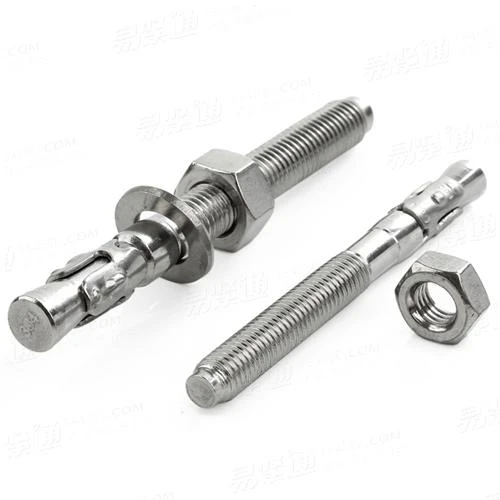
Expansion Anchors
Secure by expanding the sleeve when tightened, creating friction against the hole wall. Inexpensive and simple to install, they are suitable for non-load-bearing, light-load applications such as guardrails, brackets, and ordinary equipment bases. They are the most common accessories on construction sites.
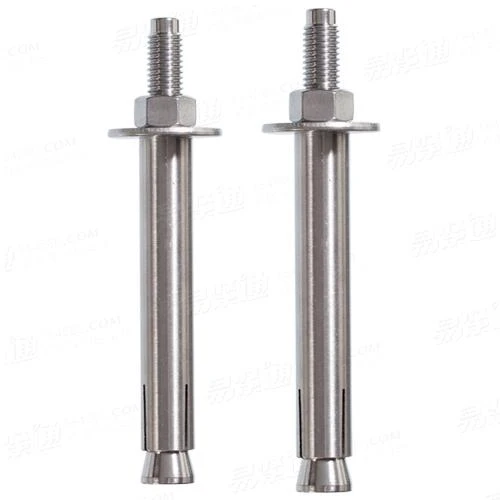
Flared-Base Anchors
These include self-flaring and post-flaring types. The base forms a "locking key" that grips the concrete, providing greater strength than expansion anchors with superior seismic and pull-out resistance. Primarily used in steel structures, load-bearing supports, and critical equipment mounting where high safety standards are required.
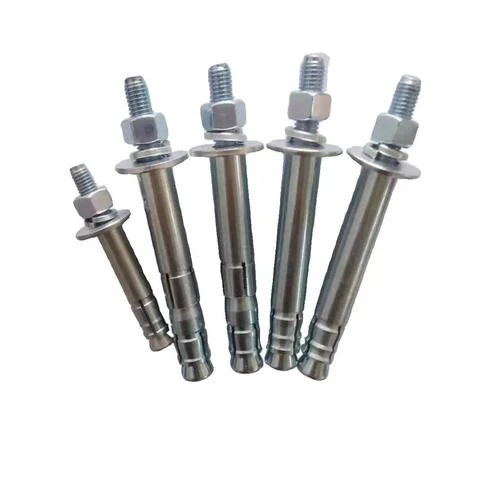
Self-Cutting Anchor Bolts
Equipped with built-in cutting blades that automatically form grooves during installation. Offering strong locking force and rapid installation, they are ideal for cracked concrete and the primary choice for mid-to-high-end mechanical anchoring.
Chemical Anchors
Chemical anchors rely not on expansion and compression but on chemical adhesives to bond the screw rod and substrate into a single unit. They consist of a screw rod, chemical cartridge, and nut washer. During installation, a hole is drilled, the chemical cartridge inserted, and the screw rod screwed in. Once the adhesive cures, it provides extremely strong holding power.
Their advantages include minimal substrate damage, seismic resistance, aging resistance, suitability for heavy loads and deep hole anchoring. They are commonly used in critical projects such as curtain wall framing, heavy equipment installation, bridge guardrails, and building reinforcement/renovation. Chemical anchors come in standard and inverted cone types, with the latter distributing stress more evenly and offering higher safety ratings.

Specialized Anchors
Specialized anchors are non-standard components designed for specific applications, offering targeted functionality that cannot be arbitrarily substituted:
- Anchor Bolts: Embedded in concrete foundations to secure steel columns, large equipment, and factory steel frames. Common types include L-shaped, 9-shaped, and anchor plate styles.
- Heavy-Duty Expansion Anchors: Designed for heavy machinery, rail tracks, and industrial equipment fixation, these anchors deliver superior tensile and shear strength.


There is no absolute superiority among different anchor bolts; it all depends on the application scenario:
For light loads and quick installation, choose expansion anchors.
For load-bearing and seismic resistance, select countersunk or self-tapping anchors.
For heavy-duty, reinforcement, and curtain walls, opt for chemical anchors.
For embedded steel columns and equipment, use foundation anchors.
Selecting the correct anchor bolt ensures construction safety while reducing costs and improving efficiency. During project execution, always match the anchor bolt type to the substrate material, load magnitude, and seismic requirements to avoid safety hazards caused by incorrect selection.
If you need to purchase or customize fasteners for your project, please contact us. We provide tailored solutions.


