


As the most fundamental and critical fasteners in industrial production, equipment assembly, construction, and routine maintenance, the material of bolts directly determines their strength, corrosion resistance, high-temperature resistance, suitability for specific environments, and service life. Common bolt materials on the market are primarily categorized into carbon steel, stainless steel, and alloy steel. Bolts made from different materials vary significantly in performance, price, and application scenarios. This article will systematically outline the key differences between bolts made of various materials to help you make an informed selection. If you need to purchase or customize fastener products, please feel free to contact us at any time.
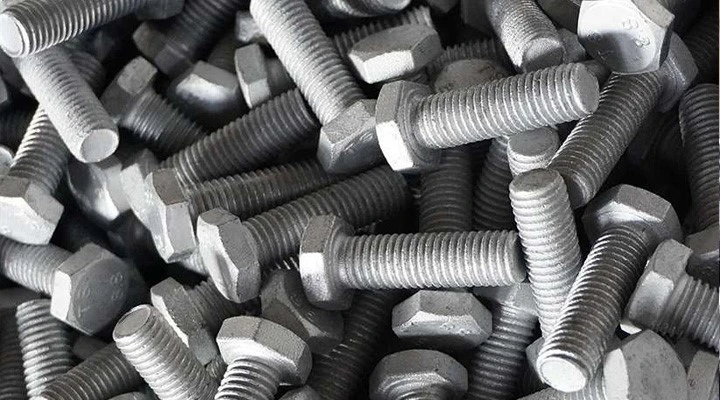
Carbon steel is the most widely used material for industrial bolts, primarily consisting of low-carbon and medium-carbon steel. It is also the most common choice for general machinery, construction, and home improvement applications.
Key Features
- Low Cost: Low raw material and processing costs result in excellent overall value for money.
- Graded Strength: Different strength grades (e.g., Grade 4.8, 8.8, 10.9, 12.9) can be achieved through heat treatment. Poor Corrosion Resistance: Prone to rusting, so surface treatments such as galvanizing, blackening, or color-coated galvanizing are typically required to enhance rust resistance.
- Good Machinability: Easy to machine and form, suitable for manufacturing various standard and non-standard bolts.
Applications
General-purpose applications in non-corrosive environments with low to moderate stress, such as steel structures in construction, general mechanical equipment assembly, pipe supports, furniture assembly, and household hardware.
II. Stainless Steel Bolts: Corrosion-Resistant, Aesthetically Pleasing, and Durable

Stainless steel bolts are most commonly made from 304 and 316 stainless steel. They are the mainstream choice for corrosion-resistant applications, offering a balance of strength and rust resistance.
1. 304 Stainless Steel Bolts
Key Features: A general-purpose stainless steel that resists corrosion from atmospheric exposure, fresh water, and weak acids and alkalis. It is non-magnetic and has moderate strength at room temperature.
Applications: General corrosion-resistant applications such as food processing machinery, medical devices, home improvement hardware, outdoor railings, plumbing and sanitary ware, and electronic equipment.
2. 316 Stainless Steel Bolts
Key Features: Enriched with molybdenum, offering significantly superior resistance to salt spray, acids, alkalis, and high temperatures compared to 304.
Applications
Marine and maritime applications, chemical processing equipment, coastal construction, seawater treatment, and highly corrosive industrial environments.
Alloy steel bolts incorporate alloying elements such as chromium, molybdenum, nickel, and vanadium into a carbon steel base, offering high strength, high temperature resistance, and fatigue resistance. They serve as essential fasteners for heavy-duty and extreme operating conditions.
Key Features
- Extremely High Strength: Tensile strength and yield strength far exceed those of carbon steel and ordinary stainless steel, enabling them to withstand immense tensile and shear forces.
- High-Temperature Resistance: Suitable for high-temperature, high-pressure, and high-frequency vibration environments; resistant to deformation and fracture.
- Requires Surface Treatment: Possesses moderate inherent corrosion resistance; commonly treated with galvanization or phosphating to enhance rust prevention.
Applications
Heavy-duty, high-temperature, and high-vibration environments such as automotive engines, construction machinery, wind power equipment, molds, high-pressure pipelines, rail transit, and aerospace.

Comparison of Stainless Steel vs. Carbon Steel vs. Alloy Steel
| Property | Carbon Steel | Stainless Steel | Alloy Steel |
|---|---|---|---|
| Strength | Medium to High | Medium | Very High |
| Corrosion Resistance | Low (requires coating) | Excellent | Moderate |
| Cost | Low | High | Medium to High |
| Appearance | Black / Zinc-plated | Silver / Polished | Dark |
| Typical Applications | General use environments | Corrosive environments | High-strength applications |
Key Principles for Selecting Bolt Materials
- Consider the load: Choose alloy steel for heavy loads and high pressure. Choose carbon steel or 304 stainless steel for standard loads.
- Consider the Environment: Choose 316 stainless steel for humid, acidic, alkaline, or coastal environments. Choose carbon steel for standard indoor applications.
- Consider Requirements: Choose Grade 4.8 or 8.8 carbon steel for general connections. Choose Grade 10.9 or 12.9 alloy steel for high-strength connections.
- Consider Budget: Prioritize carbon steel for high-volume, general-purpose applications; upgrade to stainless steel or alloy steel as needed for special operating conditions.
Summary
There is no absolute "better" or "worse" among different bolt materials; the choice depends on the specific application. Carbon steel offers high cost-effectiveness, stainless steel provides strong corrosion resistance, and alloy steel delivers high strength.
When making a selection, consider three key factors-load size, operating environment, and budget-to quickly identify the most suitable bolt material. Choosing the right bolt ensures connection safety while controlling costs and extending service life.


